Source Waist Bag for Travel, Hiking, and Daily Life
Explore 30 verified options for a waist bag suitable for travel, hiking, and daily life. Buyers can compare customization, materials, and lead times from suppliers in China to find the right fit for their needs.
Key considerations
Products List




Comprehensive Sourcing Guide
Strategic Sourcing Guide for Waist Bags
Understanding Product Specifications and Variability
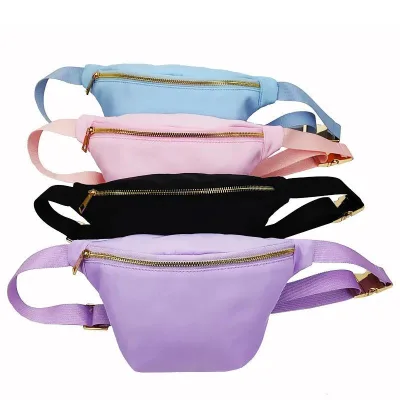
When sourcing waist bags, buyers must first navigate a complex landscape of product specifications that often vary significantly between suppliers. The core keyword "waist bag" encompasses a broad spectrum of designs, ranging from simple leisure pouches to high-performance gear for mountaineering. Based on observed market data, the material composition is a primary differentiator. Polyester is a frequently cited material for the exterior, offering durability and cost-effectiveness, while Nylon is commonly specified for the inside material, providing a smooth lining and resistance to abrasion.
The physical dimensions and capacity of these bags are critical for matching product to application. Observed specifications include a model with dimensions of 251510cm, suitable for daily carry, while other categories indicate a capacity range of 35-49 liters, which suggests a classification overlap with backpacks or large travel gear that may be worn as a waist bag or cross-body bag. This discrepancy highlights the need for precise verification of "Bag Style," which can range from "Soft Bag" to "Box Type" shapes. The shape influences how the bag sits against the body and its internal volume efficiency.
Closure mechanisms also vary, with "Zipper" being the standard closed way observed. However, the hardware and durability of these zippers are not always standardized. Buyers should verify the "Hardness" of the product, as observations range from "Medium Soft" to "Soft," indicating differences in padding and structural rigidity. Furthermore, the "Strap Type" is a vital specification; while some models feature "Double Straps" for weight distribution, others are designed as "Cross Body" or "Shoulders" bags, which may be marketed as waist bags but function differently during active use. The "Weight" is another key metric, with "Light Weight" being a common attribute, essential for applications like hiking or campus use where carrying extra mass is undesirable.
Technical Attributes and Functional Design
The functional design of a waist bag is dictated by its intended application and specific features. The market data reveals a divergence in intended use cases. Some products are categorized under "Leisure" style, suitable for "Daily Life" and general travel. In contrast, other specifications list "Sports" style with applications explicitly including "Trekking, Traveling, Outdoor, Mountaineering, Hiking, Everyday, Campus, and Camping." This suggests that a single product category can serve both casual and extreme environments, depending on the specific model selected.
Water resistance is a critical technical attribute that requires careful scrutiny. The observed data presents conflicting information: some listings state "Not Waterproof," while others claim "Waterproof" or even "High Waterproof." This inconsistency indicates that water resistance is not a universal standard for all waist bags but rather a feature specific to certain models or manufacturing batches. Buyers must verify the "Waterproof Level" for their specific use case. For outdoor activities involving rain or water exposure, a "High Waterproof" rating is essential, whereas for urban commuting, a standard water-resistant finish may suffice.
Feature sets also vary widely. A common attribute is "Multiple compartments," which aids in organization. The "Lace Type" is listed as "Cross Body, Shoulders," suggesting versatility in how the bag is worn. Additionally, the "Product Pattern" can be specific, such as "Point," or customizable. The "Color" options observed include "Black" and a combination of "Red, Blue," but buyers should expect a broader palette depending on the supplier's inventory. The "Shape" is often "Box Type," providing a structured look, though "Soft Bag" styles offer a more flexible profile.
| Attribute Category | Observed Variations | Sourcing Implication |
|---|---|---|
| Material | Polyester (Exterior), Nylon (Interior) | Verify material blend for durability and cost. |
| Waterproof | Not Waterproof, Waterproof, High Waterproof | Must confirm specific rating for intended environment. |
| Style | Leisure, Sports | Align style with target customer demographics. |
| Capacity | 251510cm (Specific), 35-49L (Volume) | Clarify if volume refers to liters or specific dimensions. |
| Strap Type | Double Straps, Cross Body, Shoulders | Ensure strap design matches ergonomic needs. |
| Hardness | Medium Soft, Soft | Determine required structural rigidity. |
Compliance, Certification, and Standards Verification
In the realm of B2B procurement, compliance and standards are often sources of confusion due to the lack of universal mandates for general consumer goods like waist bags. The supplied context mentions a standard labeled "101010," which appears to be a dimensional reference rather than a recognized industry certification. Another entry lists "HIGH quality" as a standard, which is a subjective marketing term rather than a verifiable technical specification.
Buyers should be cautious regarding certifications. While the background information mentions "CE" certification, it is flagged as low-confidence and should not be assumed to apply to every waist bag listed. CE marking is typically required for products sold in the European Economic Area, often relating to safety, health, and environmental protection requirements. However, for a simple textile bag, the necessity and applicability of CE can vary based on specific components, such as metal buckles or electronic integrations.
Instead of relying on generic "HIGH quality" labels, procurement teams should request specific test reports. These reports should verify the tensile strength of the fabric, the durability of the zippers, and the colorfastness of the materials. If the product is intended for outdoor sports, buyers should inquire about adherence to specific textile standards, such as those related to abrasion resistance or seam strength. The "Standard" field in supplier data often contains non-standardized entries, so it is imperative to ask for the exact standard number or the name of the testing laboratory that performed the evaluation.
Cost Drivers and Pricing Structures
The pricing of waist bags is influenced by a combination of material costs, customization levels, and order volume. The observed price range in the market spans from $0.05 to $18.99 USD. This wide disparity is driven by several factors. At the lower end, products likely utilize basic polyester and nylon with minimal customization and standard packaging. The higher end of the spectrum may reflect premium materials, complex designs, "High Waterproof" treatments, or extensive customization options.
The Minimum Order Quantity (MOQ) is a significant cost driver. Data indicates an MOQ range from 1 to 5000 units, with specific listings showing MOQs of 800 PCS and 500 PCS. Higher MOQs generally correlate with lower unit costs due to economies of scale in production. Buyers with smaller volume requirements may face higher per-unit prices or need to source from suppliers with lower MOQ thresholds, which might be less common for mass-produced items.
Additional cost factors include the "Product Packing." Some suppliers use "Carton" packaging, while others utilize "Polybag" or "1 PC Flat Into a Polybag." Custom packaging, such as branded cartons or specific "PCS/CTN" configurations (e.g., 40 PCS per carton), can add to the overall cost. The "Price Term" is typically listed as FOB (Free on Board), meaning the buyer is responsible for shipping and insurance costs from the port of loading, which is often Xiamen. Buyers must factor in logistics, duties, and insurance when calculating the total landed cost.
Supplier Evaluation and Operational Logistics
Evaluating a supplier for waist bag production requires a deep dive into their operational capabilities and logistical reliability. The "prod_origin" is consistently listed as China, with specific mentions of Guangzhou. Guangzhou is a major manufacturing hub for textiles and bags, offering a robust supply chain. However, buyers should verify the specific factory location to ensure it aligns with their compliance and ethical sourcing requirements.
Lead times are a critical component of the procurement timeline. The data shows a "Sample Lead Time" ranging from 5-7 days to 7-10 days, depending on the supplier. This is the time required to produce a prototype for approval. The "Production Lead Time" is significantly longer, ranging from 35-45 days to 45-60 days. These variations suggest that production capacity and current order backlogs can impact delivery schedules. Buyers must account for these timelines in their inventory planning to avoid stockouts.
Payment terms are another area for due diligence. "T/T" (Telegraphic Transfer) is a common payment method observed. Buyers should negotiate clear terms regarding deposit percentages and balance payments upon shipment. The "Port of Loading" is identified as Xiamen, which is a major port in Fujian Province. Buyers should confirm if this port is optimal for their shipping routes or if alternative ports are available to reduce freight costs.
| Operational Metric | Observed Range | Strategic Consideration |
|---|---|---|
| Sample Lead Time | 5-10 Days | Plan for prototyping and approval cycles. |
| Production Lead Time | 35-60 Days | Align production start dates with sales forecasts. |
| MOQ | 500-800 PCS (Typical) | Assess if volume matches inventory capacity. |
| Payment Term | T/T | Negotiate deposit and balance milestones. |
| Packaging | Polybag, Carton | Verify if packaging meets retail or shipping needs. |
Quality Control and Long-Term Procurement Strategy
Implementing a robust quality control (QC) strategy is essential for maintaining product integrity. Given the variability in attributes like "Hardness" and "Waterproof" levels, buyers should establish clear acceptance criteria before production begins. This includes defining the acceptable range for dimensions, such as the "251510cm" specification, and ensuring the "Inside Material" matches the agreed-upon Nylon specification.
For long-term procurement, the ability to customize is a key differentiator. The data confirms that "Customization" is available, including options for "Logo" placement, which can be "Metal or Rubber." This flexibility allows buyers to build brand identity. However, customization often extends lead times and may increase costs. Buyers should discuss the impact of customization on the "Sample Lead Time" and "Production Lead Time" during the negotiation phase.
Sustainability and material sourcing are becoming increasingly important. While the current data highlights Polyester and Nylon, buyers should inquire about the source of these materials. Are they recycled? Do they meet specific environmental standards? Although not explicitly detailed in the provided facts, these questions are vital for modern supply chains.
Finally, buyers should maintain open communication channels regarding "Fit Laptop Sizes," which are noted as "Can Be Customized." This feature is particularly relevant for models marketed for "Campus" or "Travel" use. Ensuring that the internal dimensions accommodate the intended laptop sizes without compromising the "Bag Style" or "Shape" is crucial for customer satisfaction. By focusing on these technical and operational details, buyers can mitigate risks and build a reliable supply chain for waist bag products.
FAQs
What materials are commonly used for waist bags?
Polyester is frequently used for the exterior while Nylon is common for the inside material. These materials offer durability and abrasion resistance suitable for both leisure and sports applications.
Can waist bags be customized with logos?
Yes, customization is available for logo placement using metal or rubber options. Buyers should verify specific design requirements and lead times before finalizing the order quantity.
How long does production take for waist bags?
Production lead times typically range from 35 to 60 days depending on the supplier and order volume. Sample lead times are shorter, usually taking between 5 to 10 days for approval.
What is the minimum order quantity for waist bags?
Minimum order quantities vary, with observed values starting at 500 or 800 pieces for specific models. Some suppliers may accept lower volumes, but higher orders generally reduce unit costs.
Are waist bags waterproof?
Waterproof ratings vary significantly, with some models being not waterproof while others offer high waterproof levels. Buyers must confirm the specific waterproof status required for their intended use case.
Which capacity sizes are available for waist bags?
Capacity ranges from specific dimensions like 25 by 15 by 10 cm to larger volumes of 35 to 49 liters. The shape is often box type or soft bag depending on the design.